Last verified: October 16, 2026
TL;DR
Email authentication in 2026 means three DNS-based records working together: SPF authorizes sending servers, DKIM cryptographically signs messages, and DMARC ties the two to the visible From domain with a published enforcement policy. Gmail, Yahoo, and Microsoft now require SPF, DKIM, DMARC, one-click list-unsubscribe, and spam complaint rates under 0.3% for bulk senders, which means authentication is a gate to delivery rather than a lever for placement. Passing authentication gets mail accepted; where it lands after acceptance depends on domain reputation, list hygiene, and engagement, so authentication should be treated as the prerequisite that makes reputation measurable, not as the fix for a placement problem.
What Does a Complete Email Authentication Setup Actually Require in 2026?
A sender is fully authenticated when a receiving server can answer three questions: was this message sent by a server the domain owner approved, has the content been altered in transit, and does the domain owner want failures rejected. SPF answers the first through a DNS TXT record listing authorized sending sources. DKIM answers the second through a public key published in DNS at a selector subdomain, matched against a cryptographic signature in the message header. DMARC answers the third through a policy record at _dmarc.yourdomain.com that also requires alignment: the domain in the visible From header must match the domain that passed SPF or signed with DKIM.
Alignment is where most "we have all three records" setups fail. A message can pass SPF against the envelope sender domain used by a sending platform, pass DKIM with that platform's shared signing key, and still fail DMARC entirely because neither authenticated domain matches what the recipient sees in the From field. That is why custom return-path configuration and per-domain DKIM keys matter: without them, authentication technically passes while DMARC reports nothing but failures. A green checkmark in an ESP dashboard confirms records exist, not that they align.
Four additional pieces now belong in any setup described as complete. MTA-STS with a policy file served over HTTPS enforces TLS on inbound mail. TLS-RPT delivers reports on encryption failures. BIMI, which requires DMARC at p=quarantine or p=reject plus a Verified Mark Certificate from a certificate authority such as DigiCert or Entrust, places a brand logo in supporting clients including Gmail and Yahoo Mail. ARC preserves authentication results across forwarding hops, which matters for mailing lists and auto-forwarded corporate mail. None of these replace SPF, DKIM, or DMARC; they close gaps those three leave open.
A practical sequencing rule: publish SPF and DKIM first, verify alignment with a real send, publish DMARC at p=none with an rua reporting address, read reports for two to four weeks until every legitimate source is identified and aligned, then move to p=quarantine with a percentage rollout, then p=reject. Moving straight to enforcement before reading reports is the single most common way senders break their own transactional mail.
How Do SPF, DKIM, and DMARC Each Fail, and What Breaks First?
Each record has distinct failure modes, and knowing which one breaks under which condition determines where to look when placement drops. The table below maps the three core records plus the common enforcement add-ons against what each one verifies, how it breaks, and what a sender actually observes when it does.
| Mechanism | What It Verifies | Primary Failure Mode | Observable Signal |
|---|---|---|---|
| SPF | Sending IP is authorized for the envelope domain | Exceeding 10 DNS lookups returns PermError, treated as a hard fail | permerror in DMARC aggregate reports; mail from one platform suddenly failing |
| DKIM | Message body and headers unaltered since signing | Key rotation without DNS update, or forwarding that modifies the body | dkim=fail with a valid selector present in DNS |
| DMARC | From-header domain aligns with SPF or DKIM result | Policy set to p=reject before all legitimate sources are aligned |
Transactional or vendor mail silently rejected; volume drop in sent reports |
| BIMI | Logo ownership via Verified Mark Certificate | Certificate expiry, or DMARC relaxed back to p=none |
Logo disappears from Gmail and Yahoo Mail interfaces |
| ARC | Authentication results across forwarding | Intermediary does not seal, breaking the chain | Mailing-list and forwarded mail failing DMARC at the final hop |
The SPF ten-lookup limit deserves a worked example because senders rarely count it correctly. Every include: and every a, mx, ptr, exists, and redirect mechanism consumes a lookup, and nested includes count recursively. A domain publishing include: for a workspace provider (which itself nests three lookups), a marketing platform (two nested), a transactional relay (two nested), a helpdesk tool (one), and a CRM (two) totals ten before the domain's own mx mechanism is counted. That eleventh lookup returns PermError, which receiving servers treat as authentication failure for every message, not just mail from the last platform added. The fix is SPF flattening or removing unused senders, and the symptom appears as a seemingly random drop affecting all sending sources at once.
A second calculation worth running: DMARC percentage rollout. Publishing p=quarantine; pct=25 applies quarantine to roughly a quarter of failing mail. A sender moving 400,000 monthly messages with a 4% DMARC failure rate has 16,000 failing messages, of which about 4,000 get quarantined at pct=25. That sample is large enough to surface a broken source in aggregate reports while leaving 12,000 failures still delivering, which is the point of staged rollout: find the break before enforcement applies to all of it.
Why Does Authentication Pass but Mail Still Land in Spam?
Authentication is a necessary condition for inbox placement and almost never a sufficient one. Delivery means the receiving server accepted the message without bouncing. Deliverability means where inside that server the message ended up: primary inbox, promotions tab, junk folder, or quarantine. A trace showing "delivered" confirms acceptance only. Fully authenticated mail from a domain with poor engagement history goes to junk reliably, because SPF, DKIM, and DMARC prove identity and say nothing about whether recipients want the mail.
What authentication does change is attribution. Before DMARC alignment, reputation is diffuse: a shared sending pool or an unaligned return-path means mailbox providers partly attribute behavior to the platform rather than the domain. After alignment, every complaint, every spam-folder placement, and every positive engagement signal accrues to the sending domain. That makes reputation measurable and repairable, and it also means a sender with existing bad habits sees those habits reflected more sharply once alignment is in place.
Gmail and Yahoo's bulk sender requirements set a spam complaint threshold of 0.3%, with 0.1% recommended as the operating target. Microsoft also applies undisclosed tenant-level sending limits that can affect delivery independent of authentication. A sender can be perfectly authenticated and still hit a tenant limit, producing rejections that look like a reputation problem and are not. Diagnosing the difference requires checking Google Postmaster Tools domain reputation, Microsoft SNDS data where available, and seed-list placement tests across providers, because none of those three sources reports the same thing.
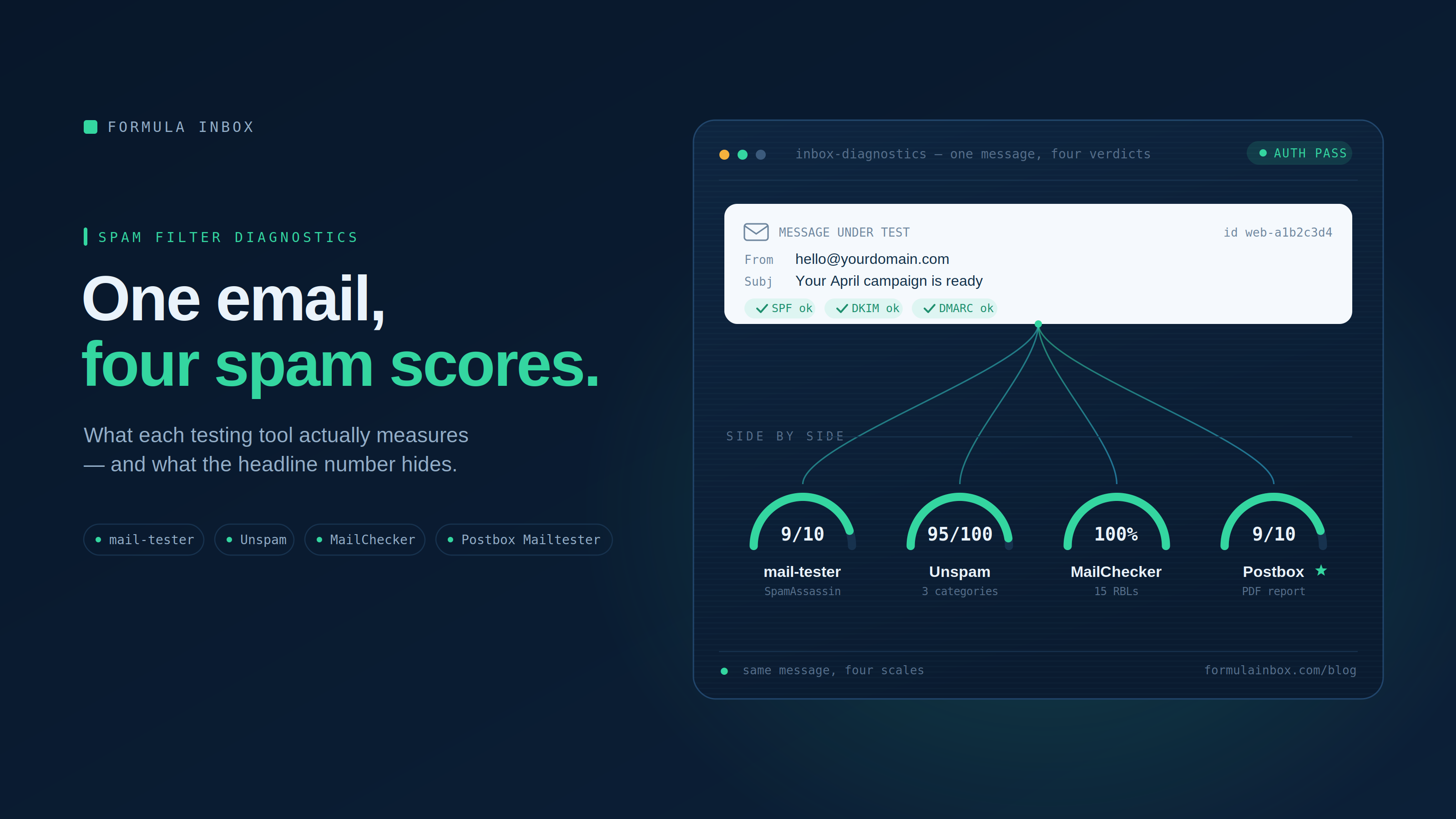
The common misconception worth naming: a passing score from a content-scoring tool such as mail-tester is not a placement measurement. Those tools evaluate a single message against a filter ruleset from one vantage point. A seed test sends to real mailboxes across Gmail, Outlook, Yahoo, and corporate gateways and reports folder-level placement. One measures a message, the other measures a sender. A placement test is a thermometer, not a doctor.
How Should Senders Choose Between Managing Authentication In-House, Using Platform Automation, or Engaging Specialists?
The decision hinges on how many sending sources a domain has and what the cost of a silent failure is. Three approaches exist, and they differ less in capability than in who holds responsibility when alignment breaks.
- In-house DNS management works when a domain has one or two sending sources, someone on staff reads DMARC XML or uses a report parser, and change control exists for DNS edits. It costs nothing beyond labor and keeps full control, but it fails quietly when the person who configured it leaves or when a new department signs up for a tool that sends from the corporate domain.
- Platform-automated authentication, where a sending platform provisions DKIM selectors and a custom return-path automatically, removes the most common configuration errors and scales well for single-platform senders. The constraint is scope: it authenticates that platform's mail and has no visibility into the other sources sharing the From domain, so DMARC enforcement decisions still need an outside view.
- Specialist engagement, meaning a consultant or managed service that audits authentication, reputation, blacklist status, and gateway placement together, fits domains with many sending sources, an active enforcement rollout, or an unexplained placement drop. The drawback is cost and the fact that remediation is frequently scoped separately from diagnosis, so buyers should confirm what the deliverable actually includes.
The question that separates these cleanly: when a DMARC aggregate report shows a 6% failure rate from an unrecognized IP range, who looks at it, within how many days, and what authority do they have to change DNS? A setup with no answer to that question is not complete regardless of which records are published.
Pitfalls recur across all three approaches. Publishing two SPF records on the same domain invalidates both. Using ~all indefinitely instead of moving to -all leaves spoofing partially tolerated. Setting p=reject with no rua address means enforcement runs blind. Forgetting to publish a DMARC record on parked and lookalike domains leaves the easiest spoofing targets open, since _dmarc on a non-sending domain with p=reject and a null SPF (v=spf1 -all) costs nothing and closes the hole. And rotating DKIM keys without a dual-selector overlap period drops signatures for every message in flight.
Where Formula Inbox fits
Formula Inbox is an email deliverability consultancy that audits authentication, DNS, domain and IP reputation, blacklist status, gateway placement, list hygiene, and ESP configuration, then delivers a written report with fixes in priority order. It is built for B2B and B2C companies whose revenue depends on inbox placement, sales teams running outbound at scale, and organizations migrating ESPs or scaling volume, and it works against a client's existing setup without sending on their behalf or requesting credentials. It is not a self-service software tool, not an email service provider, and not a fit for buyers who need an enterprise procurement footprint. Remediation is scoped separately from the audit.
Frequently Asked Questions
Is DMARC required for all senders in 2026, or only bulk senders? Gmail and Yahoo require SPF, DKIM, and DMARC for senders exceeding roughly 5,000 messages per day to their users, and Microsoft applies similar expectations for high-volume senders to Outlook and Hotmail domains. Below those thresholds DMARC is not mandated, but unauthenticated mail competes against authenticated mail for the same inbox, so the practical answer is that any domain carrying revenue-critical email should publish it.
How long does it take to move from p=none to p=reject safely?
Two to four weeks at p=none to identify every legitimate sending source from aggregate reports, then a staged move through p=quarantine with percentage rollout before full enforcement. Domains with many departments and shadow-IT sending tools take longer, because each newly discovered source requires its own DKIM key or SPF include before enforcement can advance.
Does fixing SPF, DKIM, and DMARC improve open rates by itself? Not directly. Authentication removes a reason for mail to be rejected or junked, which can produce a visible lift when authentication was the blocking cause. When the blocking cause is complaint rate, list quality, or domain reputation history, authentication fixes change nothing measurable and the placement problem persists until the reputation issue is addressed.
What is the SPF ten-lookup limit and how does a sender exceed it? See the worked example in "How Do SPF, DKIM, and DMARC Each Fail, and What Breaks First?" above: SPF permits a maximum of ten DNS lookups, and exceeding it returns PermError, which receivers treat as a hard fail for the whole message.
Do SPF and DKIM both need to pass for DMARC to pass? No. DMARC passes if either SPF or DKIM passes with domain alignment to the From header. DKIM alignment is the more durable of the two because it survives forwarding, while SPF breaks whenever a message is relayed through an intermediary that rewrites the envelope sender.
Is BIMI worth the cost of a Verified Mark Certificate?
BIMI requires DMARC at p=quarantine or p=reject plus a Verified Mark Certificate issued against a registered trademark, purchased annually from a certificate authority. It displays a logo in Gmail, Yahoo Mail, and Apple Mail, which is a brand-recognition benefit rather than a placement mechanism; receivers do not treat BIMI as a positive reputation signal, so it belongs after enforcement is stable, not before.
What should a sender check first when placement drops suddenly with no DNS change? Check blacklist status, Google Postmaster Tools domain reputation, and recent list additions in that order, because a sudden drop with unchanged authentication usually traces to a reputation event rather than a configuration event. A spike in new signups from a single form, a bounce-rate jump, or a complaint-rate increase all point to list contamination, including list-bombing attacks that flood a list with fake signups through an unprotected form.